
Creating a botanical mural for a public setting
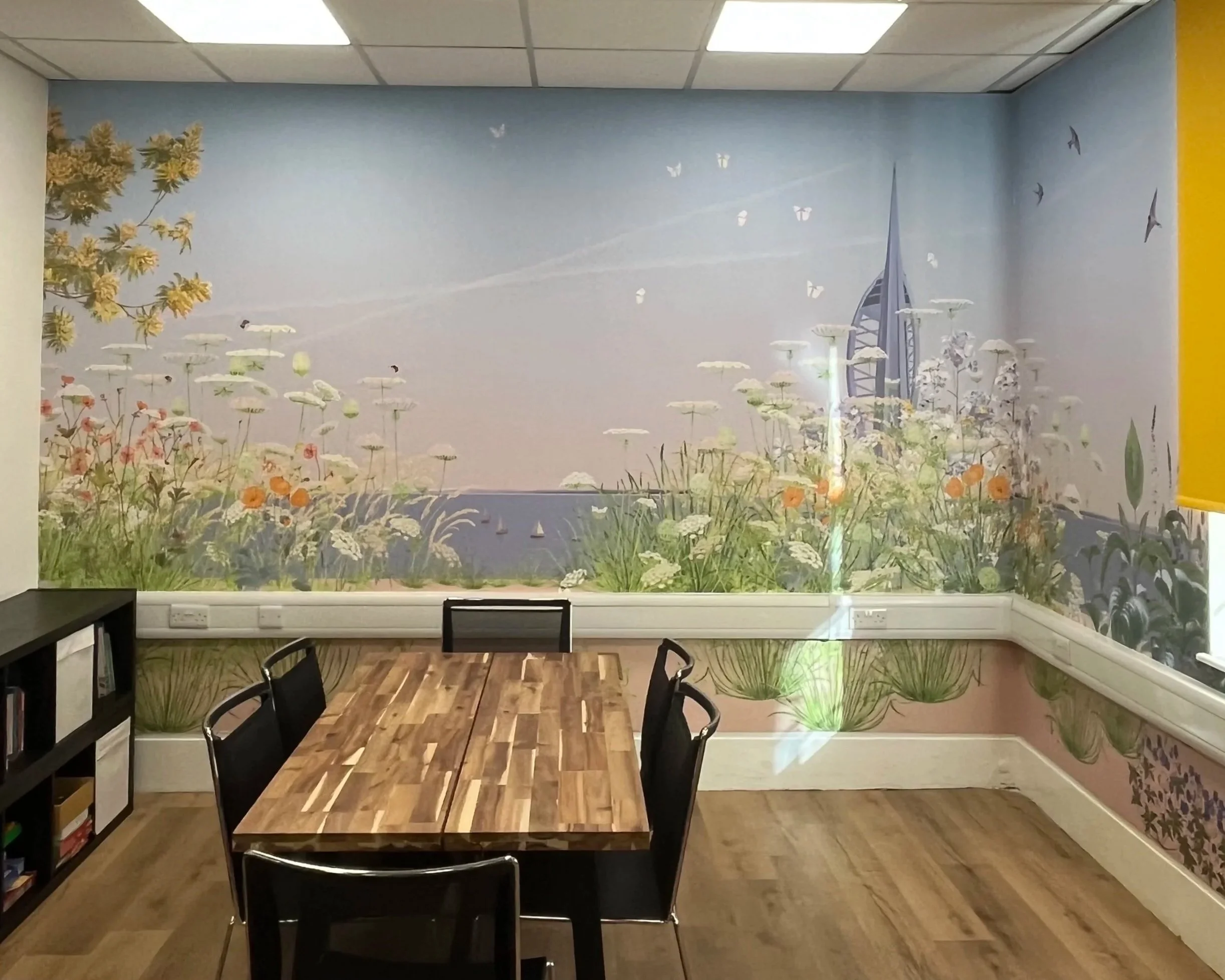
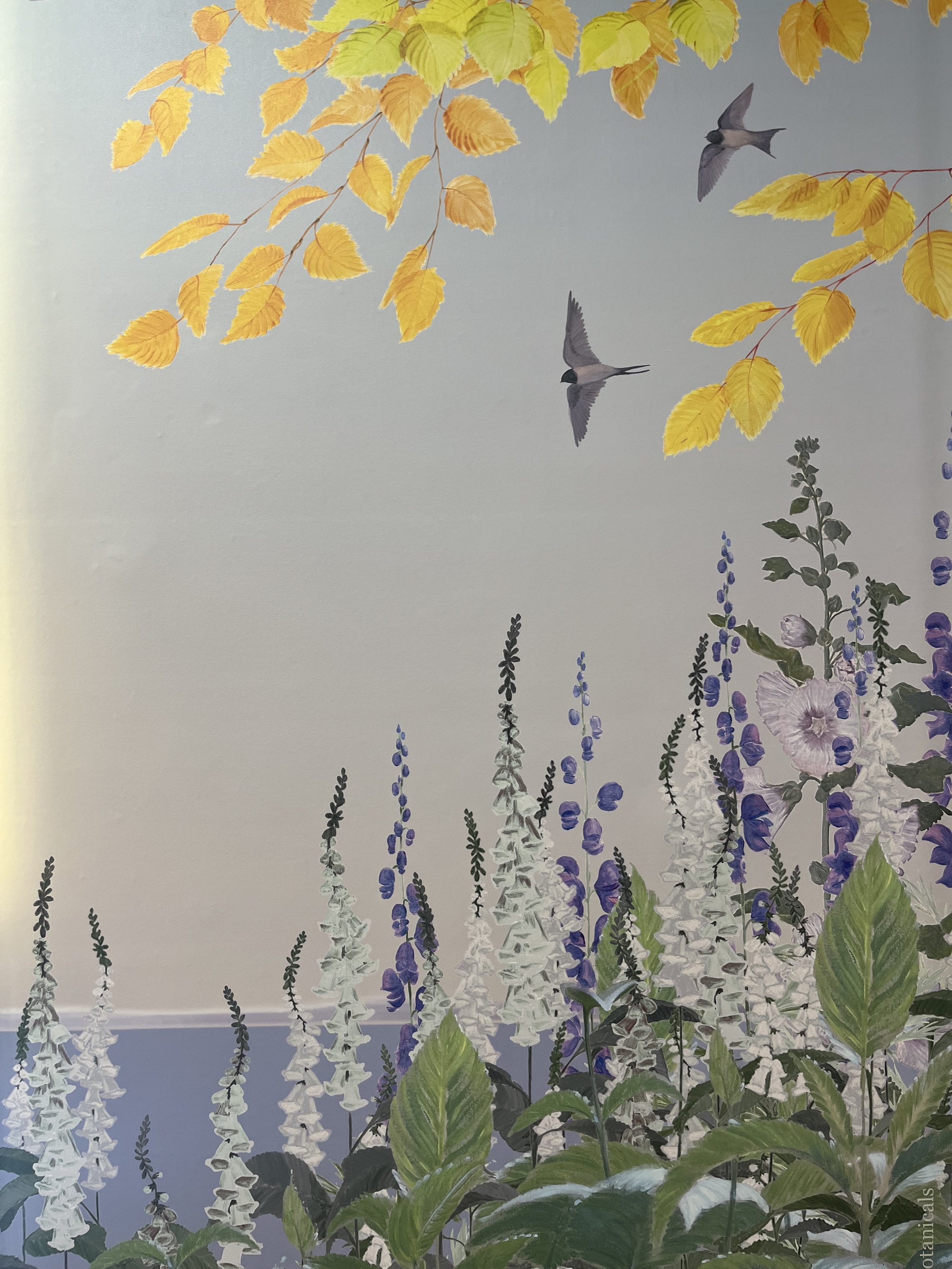
I was recently delighted to be invited to create a botanical mural to soften and change the space in a large meeting hall for youth development charity, URBOND.
The design scope was to soften and personalise this large and well used space in the community headquarters. As the charity headquarters is primarily used by local youth, it was also important to involve a youth ambassador team at URBOND who nominated themselves to be part of the design process. Deciding what the mural would incorporate had to be a joint affair, and the resulting mural needed to include references that the young people who use the space recognised and that they felt were special. The mural also had to sit happily in the space and complement the charity brand colours of grey, black and orange.
Why a botanical mural?
Research has demonstrated a significantly positive relationship between being exposed to natural environments and reduced risk of stress*. A new study has also just shown that viewing original art has an immediate and measurable effect on the human body, with the ability to reduce stress and increase excitement simultaneously.
With these findings in mind, URBOND decided to invest in a botanical mural for a space that sees over 300 young people use it and move through it every week. The mural had to provide a feeling of unity, ownership, calm and interest. It had to fire the imagination and calm the mind.
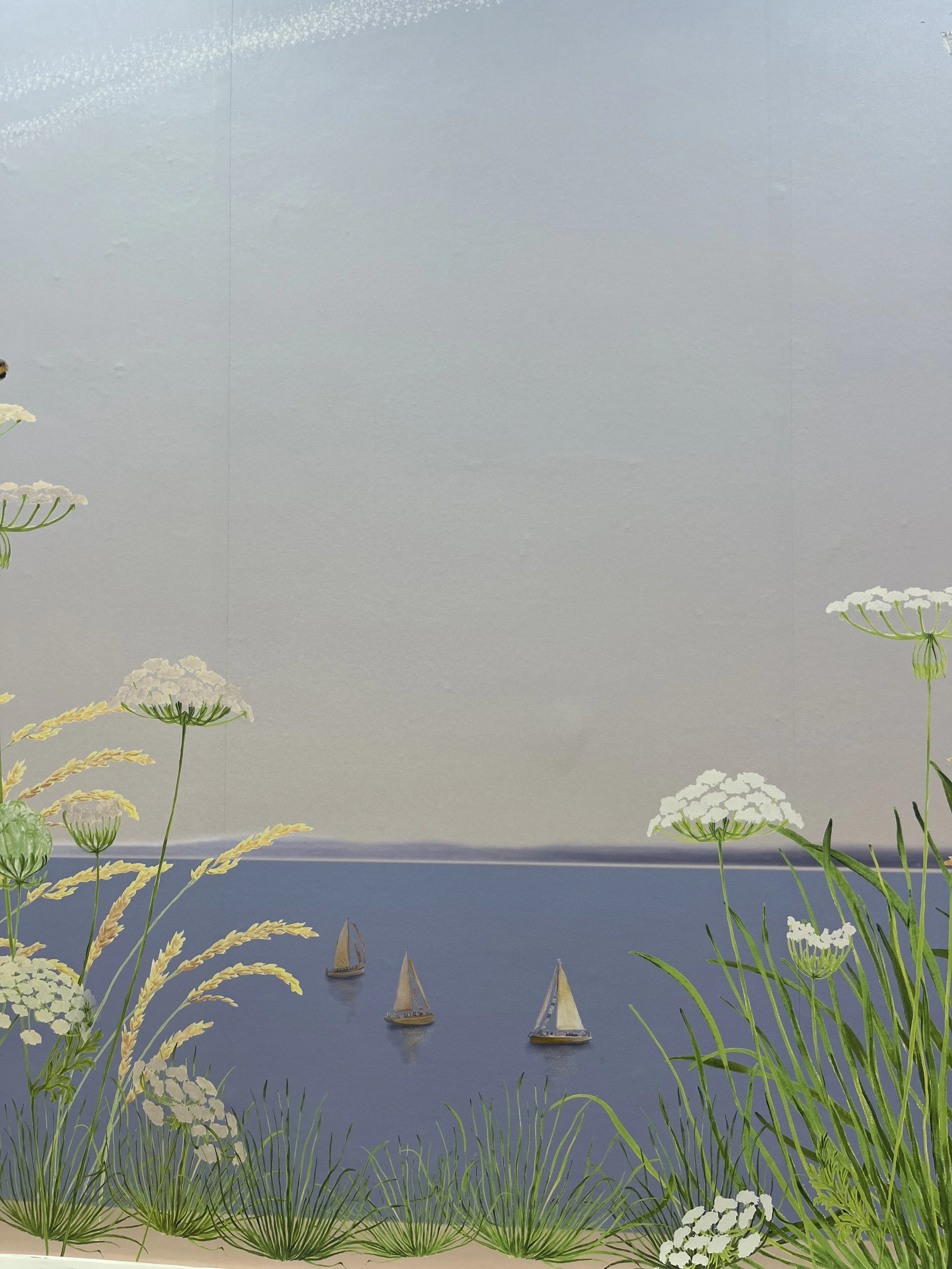
To achieve this, firstly we decided the ‘planting’ in the mural should feel opulent, colourful and celebratory, with lots of interest like birds and butterflies hidden in the painting - more rather than less. Secondly, we decide to include a long view out to sea. Research into. stress has found that our cortisol levels drop and we relax if we can see a long way. Our ancient brain, located in our amygdala, relaxes when we know there are no immediate threats, and a long view encourages this understanding. In this case, we used a sea view as Portsmouth, where the centre is located, is close to the sea and Portsmouth port.
Finally, we agreed that the mural should wrap around two walls, so that it appeared to surround the viewer rather than be located on one wall as a picture. Having the mural on two walls gave the impression of walking into the garden as you approached it.
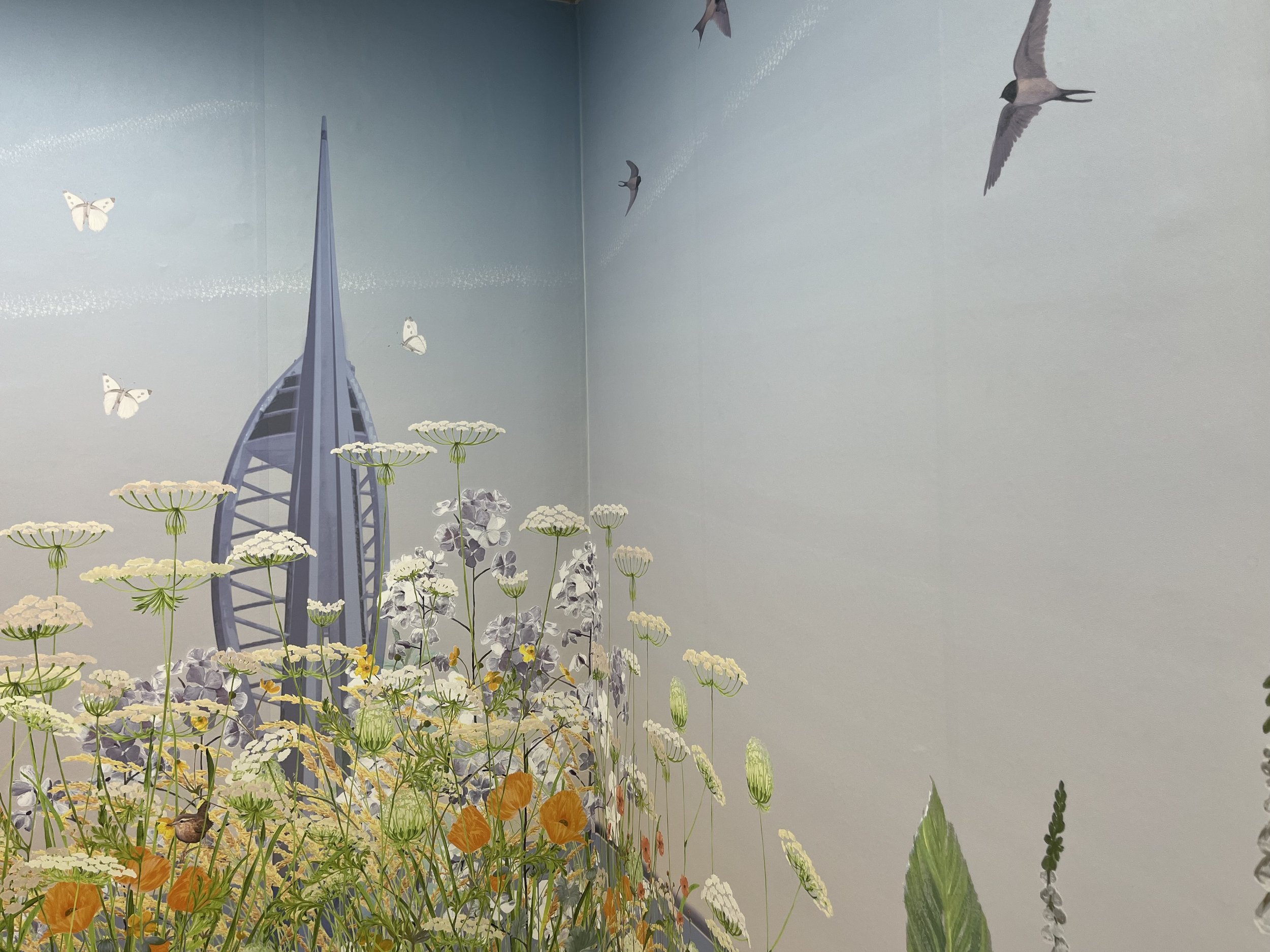
The mural took three weeks for me to create, using hand painted illustrations of plants, flowers, birds and insects. I also painted a version of the local Spinnaker tower which overlooks the harbour, to emphasise the placemaking element of the mural. The mural was then printed onto hospital grade wall covering, so could be installed in one day. This is arrangement offers a huge advantage over murals painted directly onto walls, as the installation interruption is short and relatively clean.
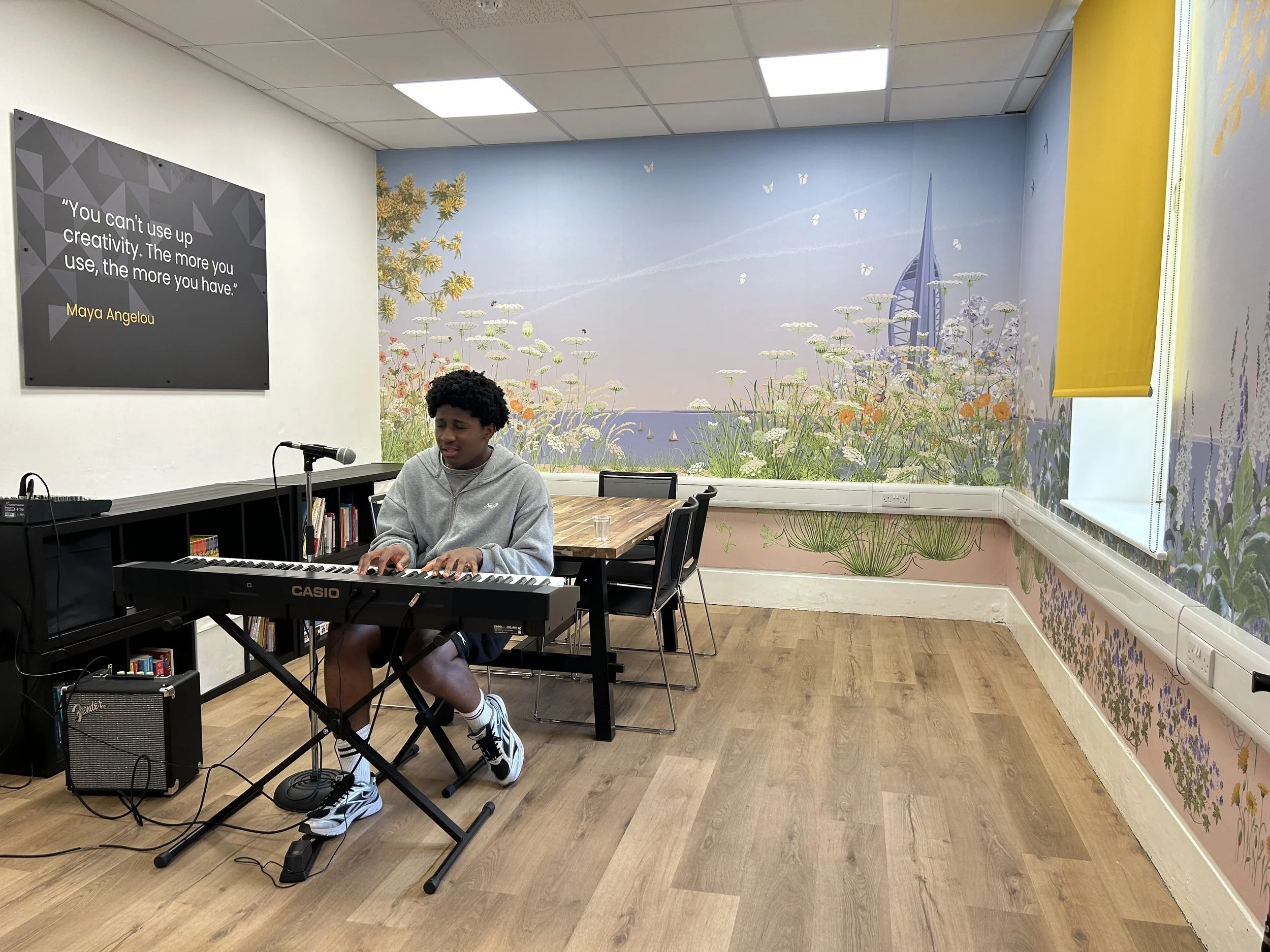
The URBOND mural is a huge success and is already being enjoyed by the community who use the centre for weekly activities, conferences and performances. I was lucky enough to attend the big reveal and many parents approached me to tell me which elements of the mural they liked the most, and how it is already creating a feeling of wellbeing, calm and connection.
Thanks to URBOND for commissioning this mural and to Sue Elton, High Sherriff of Hampshire 2025, for supporting the project and inviting me to create the design.
Keywords: placemaking, biophilic design, nature inspired wall designs, change making in health settings, healthcare and public interiors
*(Chen et al., 2018; Elsadek et al., 2019; Morita et al., 2007; Ochiai et al., 2015).