
Our use of floral fabrics through the ages
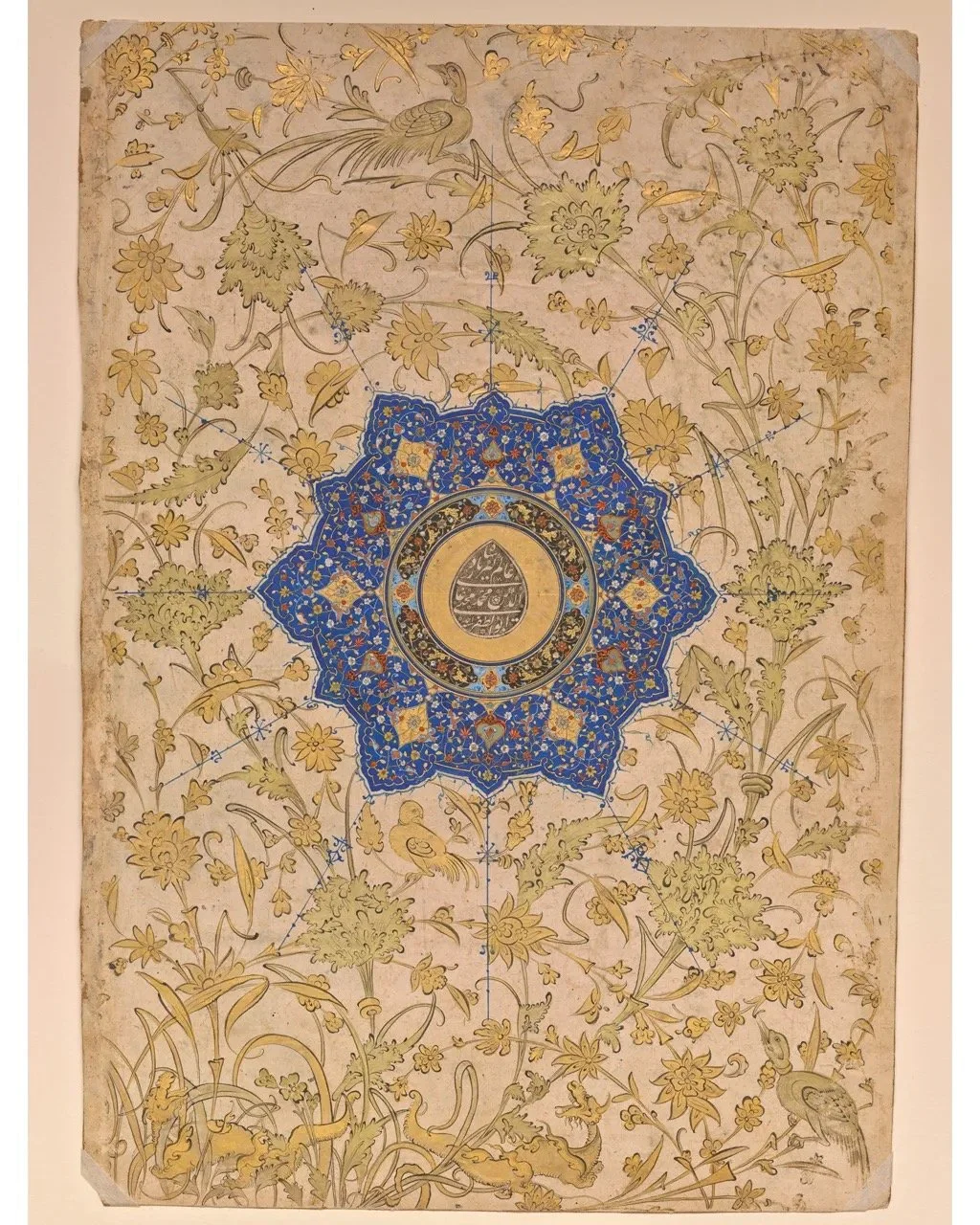
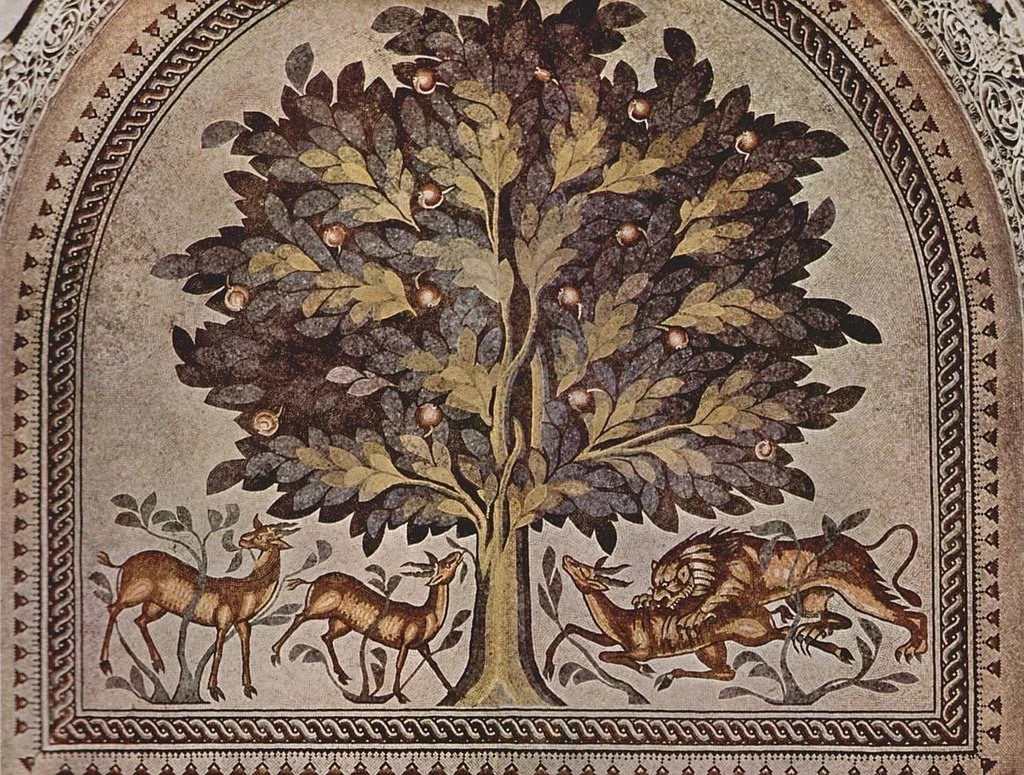
If you’re using floral textiles in your interior designs, you’re in good company. Botanical and floral designs have been popular for centuries and for good reason, they are timeless, fresh and wonderful. We’ve used flowers and depictions of nature to decorate our bodies for centuries, even before we used them to decorate our houses, and started creating images of nature in our livings spaces as soon as we could use ink and coloured tiles. Below are images of islamic art from the mid-16th century Iran, a tiled floor near Jordan from the 700s and a floral wall design painted on Bramley church, Hampshire, UK, in the early 13th century. All of these designs could easily be found on a floor or wall today.

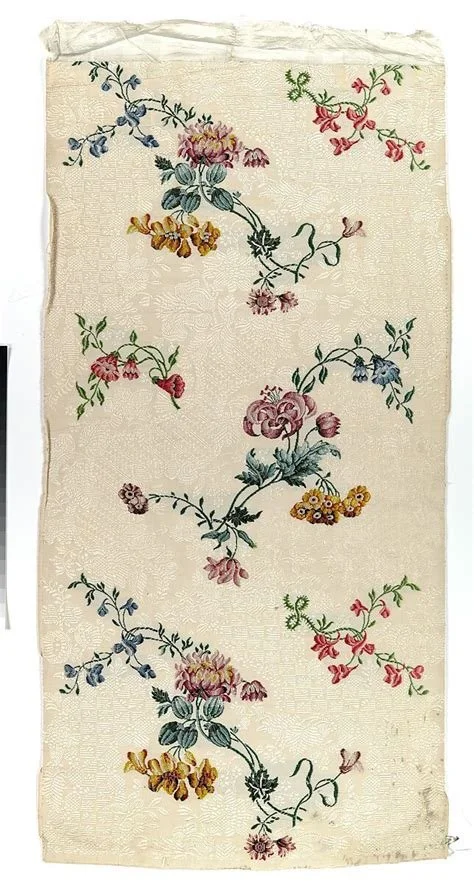
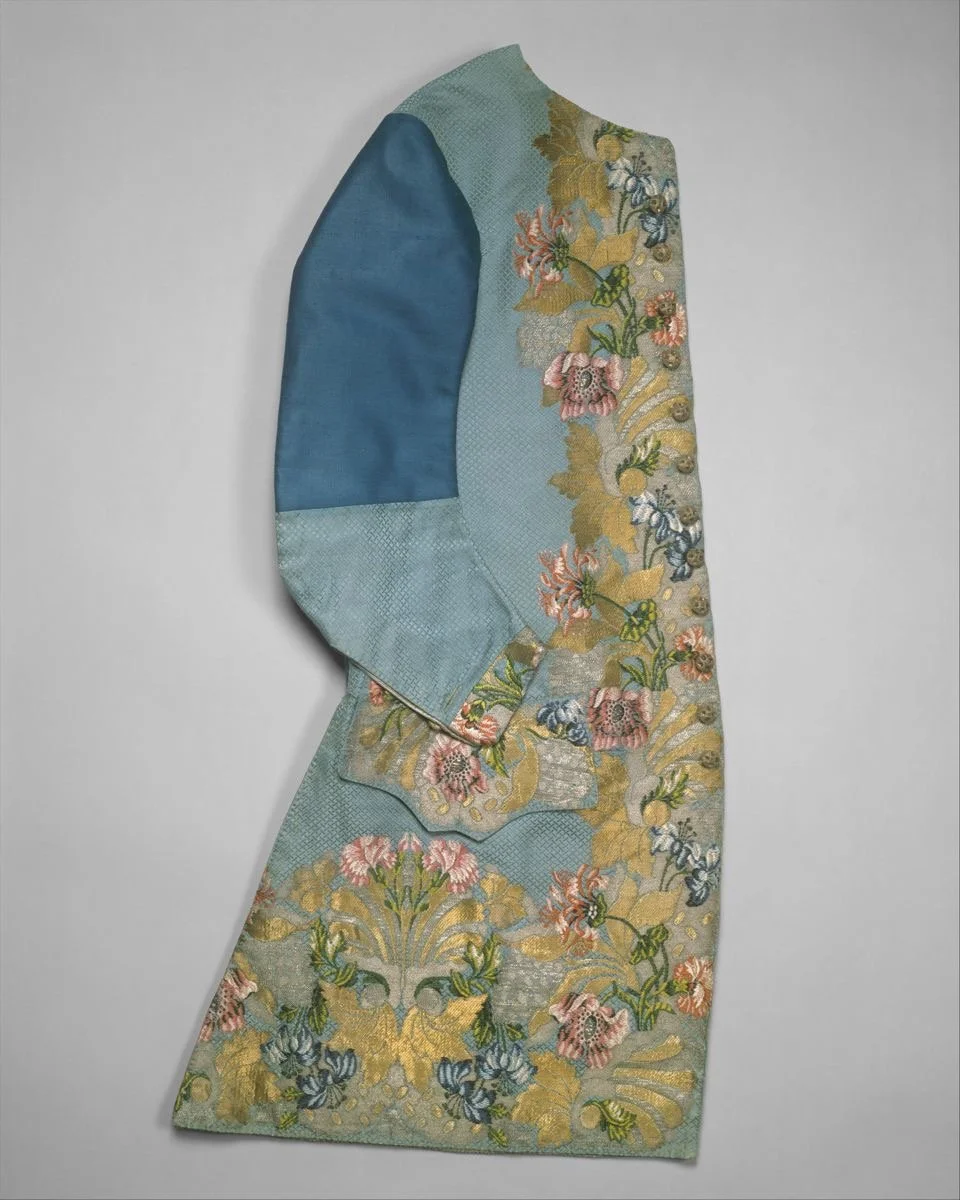
For hundreds of years the English imported beautiful botanical patterned silks from France where a significant and successful silk-weaving industry existed from the fifteenth century. In the 1600s, when many French silk weavers moved to England, English textile workers mainly based in Spitlefields, London, were able to benefit from their silk weaving secrets. Whereupon the English silk designers distinguished their work from the French taste for loose depictions of flowers by producing patterns that were often based on actual botanical specimens or engravings. It was around this time that the first botanical textile designers became well known. Anna Maria Garthwaite (1690–1763), an English woman from Leicestershire working in Spitlefields in the 1700’s, was one of the first widely recognised designers. Anna Maria was known for her bold floral designs that wouldn’t look out of place now, as you can see from the second of her designs shown below, a waistcoat with silk, designed by Anna Maria Garthwaite and woven by Peter Lekeux in 1747 (Courtesy of the Metropolitan Museum of Art).
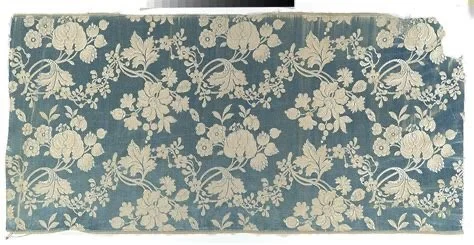
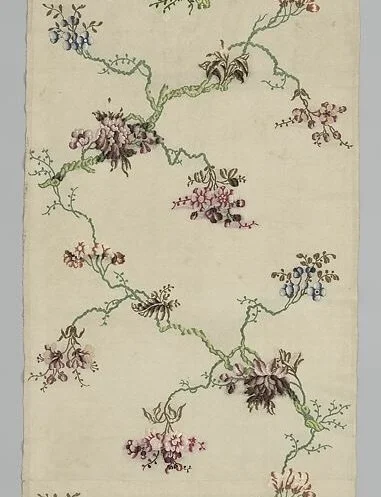
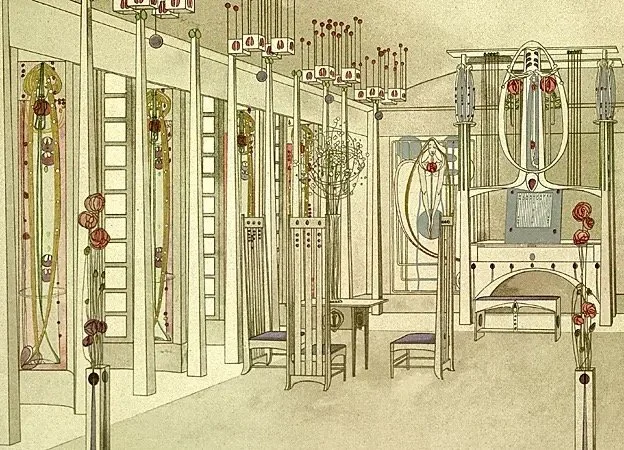
The now hugely well known William Morris brought floral wall coverings and textiles to the masses in Britain during the Arts and Crafts period of the early 1900s. At that time there was very little separation between the specialisations of architecture, textile design, and traditional craftsmanship. In the face of wide scale industrialisation at the time, artists such as William Morris, Edwin Lutyens, and Charles Rennie Mackintosh with his wife Margaret MacDonald Mackintosh, introduced depictions of flowers into the design of staircases, fireplaces, wallpapers, and windows.
One of my favourite textile designers is William Morris’ daughter, May Morris, used detailed studies of perennial shrubs, meadow plants and cottage garden flowers in her designs. Below are images of ‘a room for music lovers by Charles Rennie Mackintosh, a detail from an embroidered screen designed by May Morris and a room in Stanmore Hall, designed by William Morris, flowers abound in all.
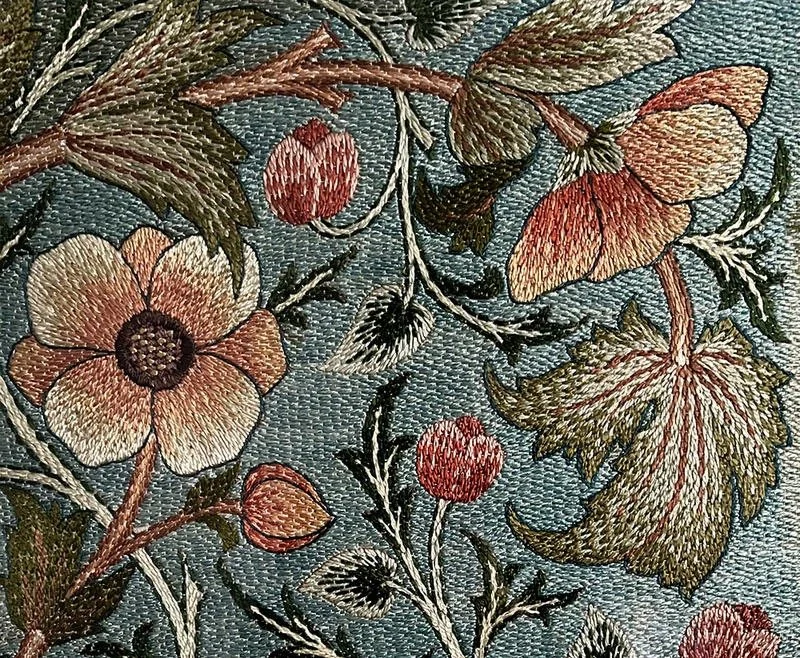
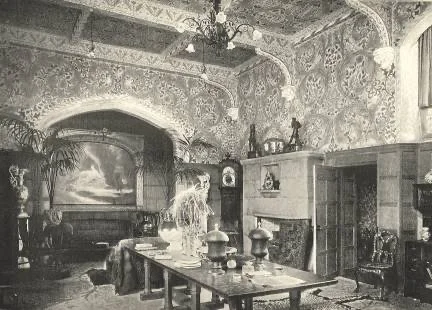
Today we are lucky enough to have a wealth of contemporary and historical floral prints to choose from and luckily they can be layered and mixed with happy abandon, as long as you choose a simple colour palette or complementary scales of design (not too many different sizes of print). For her book and social media pages ‘The Bible of British Taste’, journalist and writer on history of art and design Ruth Guilding travels around the UK capturing contemporary interiors that are smothered in florals - on tapestries, wall hangings, cups, carpets, tablecloths and curtains, all somehow happily rubbing shoulders with each other.
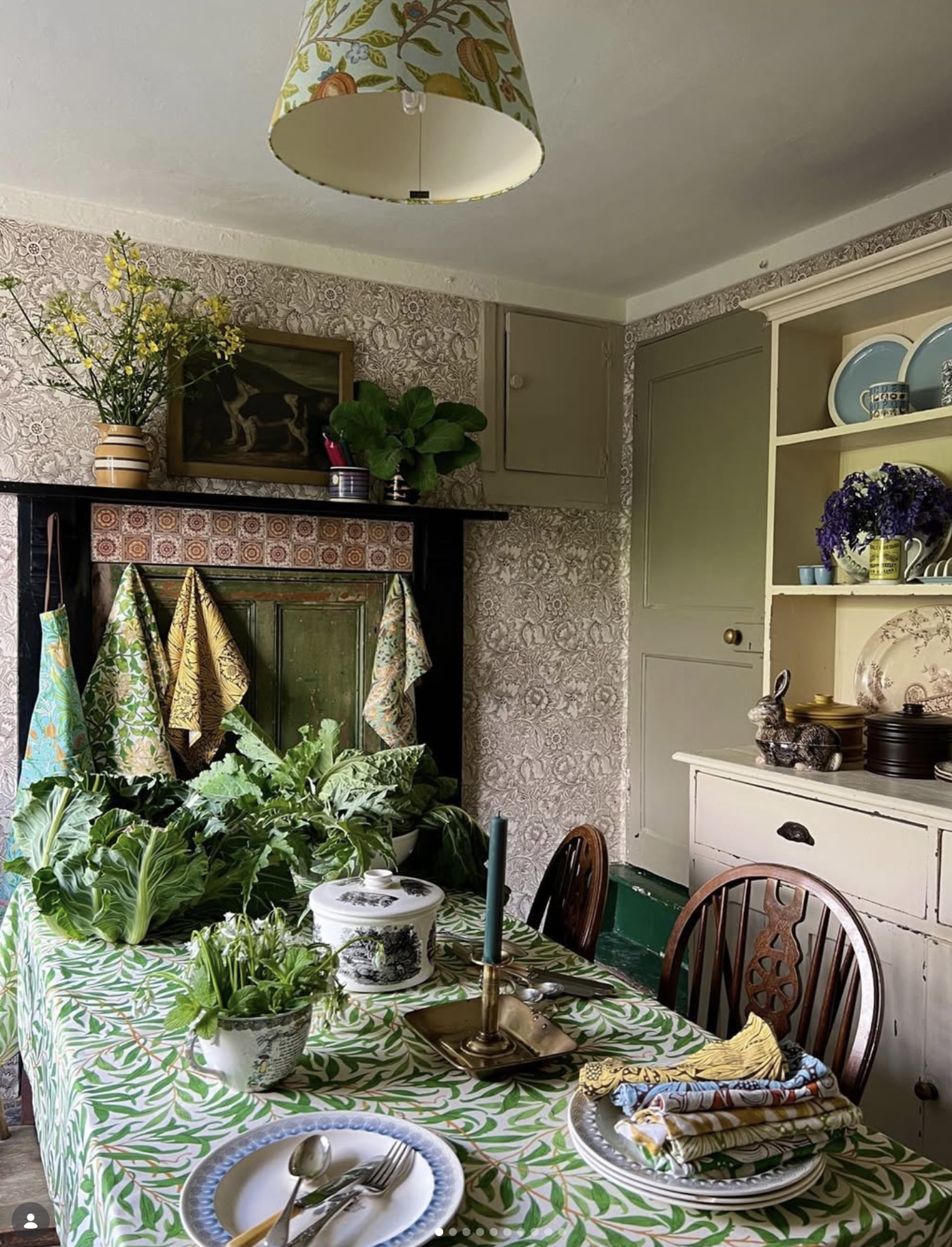
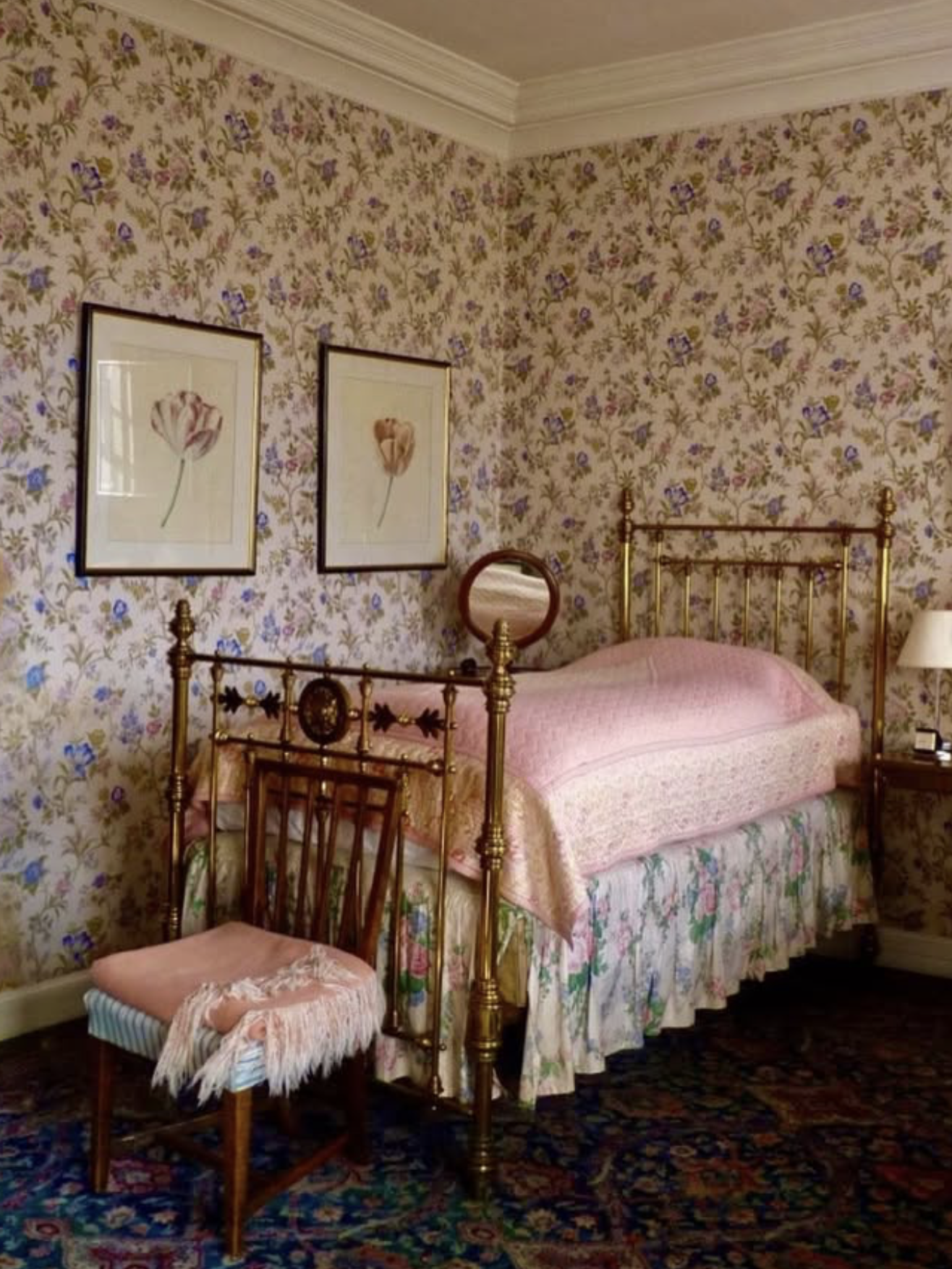
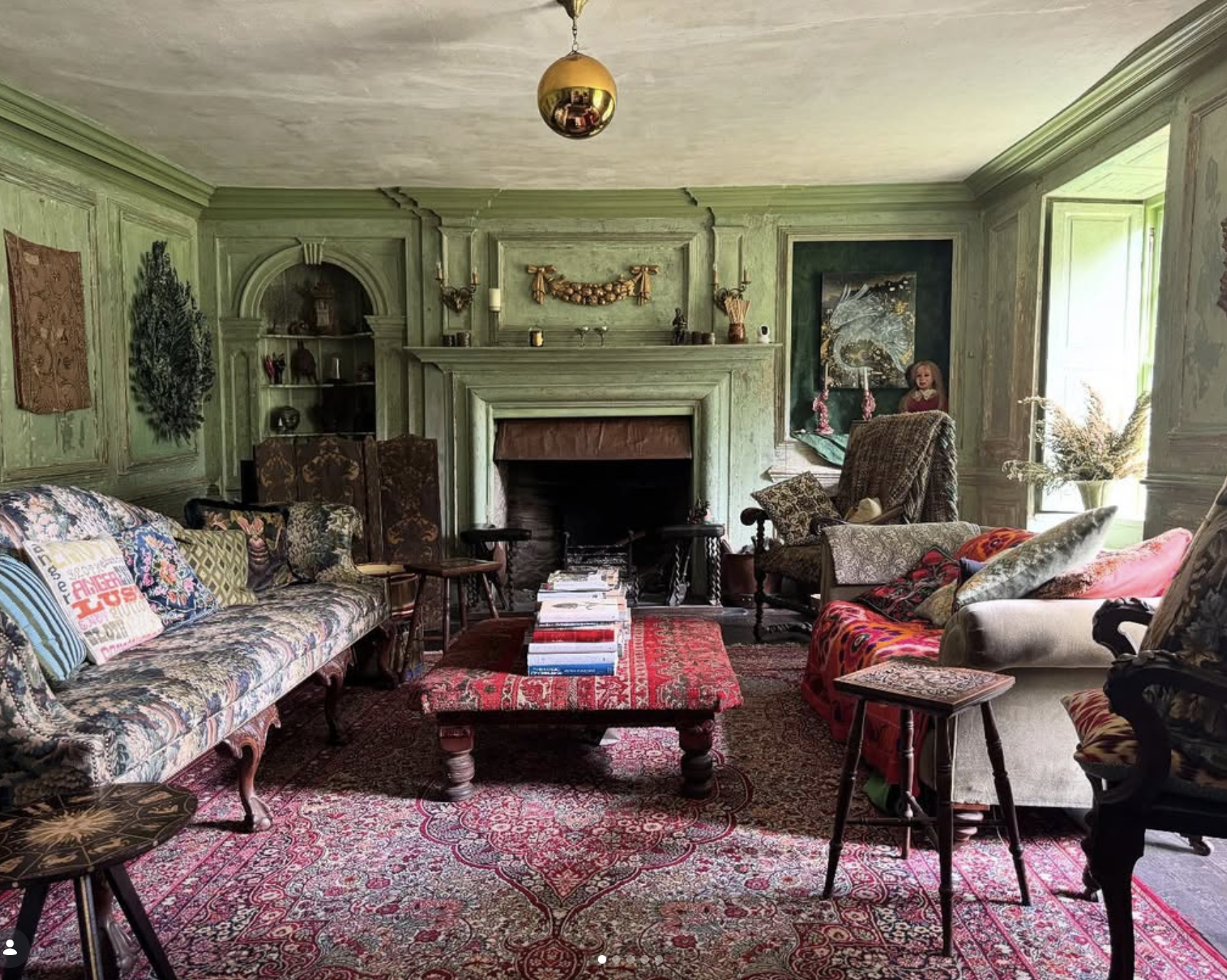
So don’t be put off by the idea of florals being out of fashion, we will always love them - or having too many, you can never have enough flowers! Bring samples home and try them against each other and choose your colour palette carefully. It is amazing how many complementary prints you can fit in a room if they are all in the same hue or colour way.
Have fun with flowers and leaf designs, your space may end up feeling a bit crowded if you go over the top, but it will always feel welcoming!